
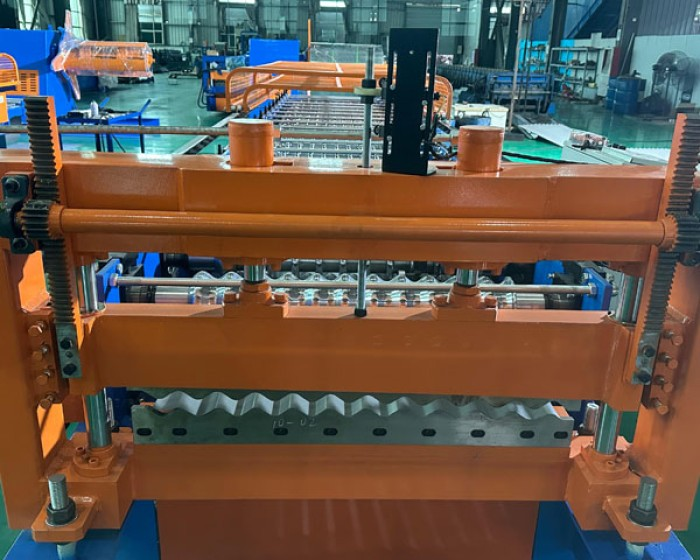
Construction projects require roofing systems that are durable, accurate, and easy to install. Roof panel roll forming machines have become an essential part of modern manufacturing because they produce high-quality roofing panels with consistent dimensions and excellent structural performance. By using advanced production technology, manufacturers can improve efficiency, reduce material waste, and deliver reliable roofing products for residential, commercial, and industrial buildings. Modern solutions, including the light gauge steel frame machine produced by experienced light gauge steel framing manufacturers, also contribute to the development of strong and efficient building systems.
What Is a Roof Panel Roll Forming Machine?
A roof panel roll forming machine is specialized equipment that transforms steel coils into finished roofing panels through a continuous roll forming process. The steel passes through multiple precision rollers that gradually shape the material into the required profile without affecting its structural integrity.
This automated process ensures every roofing panel maintains uniform dimensions, making installation easier and improving the overall quality of construction projects.
How Roof Panel Roll Forming Machines Improve Construction Quality
Precision Manufacturing
Modern roll forming machines produce roofing panels with highly accurate dimensions and smooth finishes. Consistent profiles reduce installation errors and help create durable roofing systems.
Faster Production
Automated production lines operate continuously, allowing manufacturers to produce large quantities of roofing panels within shorter production cycles. Increased productivity helps construction projects stay on schedule.
Consistent Product Quality
Advanced control systems monitor the forming process to ensure every roofing panel meets the required specifications. Reliable quality improves the performance and appearance of finished buildings.
Reduced Material Waste
Precision feeding and forming technology maximize raw material utilization while minimizing production scrap. This lowers manufacturing costs and supports efficient resource management.
Improved Installation Efficiency
Uniform roofing panels fit together accurately during installation, reducing labor requirements and improving construction speed. Better-fitting components also contribute to stronger and more reliable roofing structures.
Applications of Roof Panel Roll Forming Machines
Roof panel roll forming machines are widely used to manufacture roofing products for residential homes, commercial buildings, warehouses, industrial facilities, agricultural buildings, shopping centers, office complexes, and infrastructure projects. Their versatility allows manufacturers to produce roofing panels for a variety of construction requirements.
Benefits of Modern Roof Panel Roll Forming Machines
- High production efficiency
- Excellent dimensional accuracy
- Consistent product quality
- Reduced material waste
- Faster installation
- Lower operating costs
- Reliable long-term performance
Choosing the Right Roll Forming Equipment
Manufacturers should consider production capacity, machine durability, automation features, maintenance requirements, and technical support when selecting roof panel roll forming equipment. Investing in reliable machinery improves manufacturing stability while supporting future business growth.
Advanced roll forming systems also provide greater flexibility, allowing manufacturers to meet changing customer demands while maintaining high-quality production standards.
Conclusion
Roof panel roll forming machines play a vital role in improving construction quality by delivering precise roofing panels, increasing manufacturing efficiency, reducing waste, and supporting faster installation. Their advanced automation and reliable performance make them an essential investment for manufacturers serving the modern construction industry.
Whether integrating a light gauge steel frame machine into production or partnering with experienced light gauge steel framing manufacturers, businesses can improve manufacturing capabilities, deliver high-quality roofing solutions, and support stronger, more efficient construction projects.